Yesterday, the Turkish Parliament passed the framework law titled “Strengthening National Solidarity and Social Cohesion”. The National Congress of Kurdistan (KNK) considers this step a milestone in the century-old Kurdish-Turkish conflict.
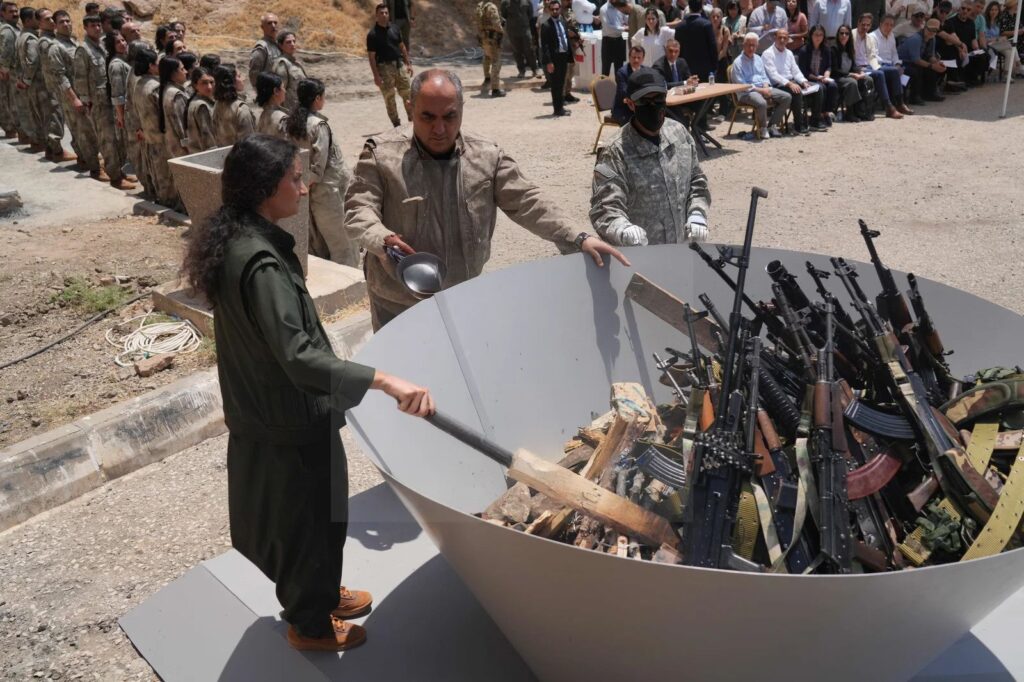
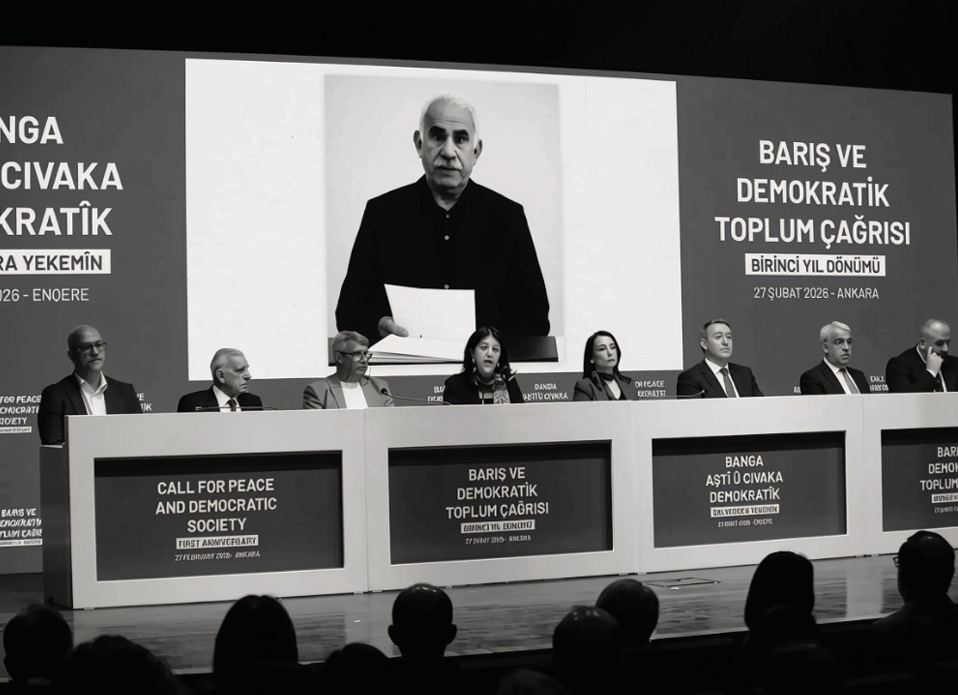
The chief negotiator for the Kurdish side, Mr. Abdullah Öcalan, has taken historic steps toward this since his call for “Peace and a Democratic Society” on February 27, 2025. To ensure that this conflict is resolved politically, he and his movement have jointly declared an end to the strategy of armed struggle. Through dialogue with his movement, Mr. Öcalan has secured the dissolution of the Kurdistan Workers’ Party (PKK), which, since its founding in 1978, has fostered Kurdish national self-awareness and enabled national, political and social organization in the face of assimilation and oppression by the Turkish state.
It is a positive development that the Turkish government finally has taken note of steps by Mr. Öcalan and the Kurdish movement and has responded with this law, and there is now hope that this will pave the way for peace and a democratic solution of the Kurdish Question.
While the Framework Law is important as a first step toward a peaceful resolution of the conflict, it is not enough, because the Kurdish question cannot be resolved solely through the dissolution of the PKK, which is the central focus of the law. The resistance of the PKK represents the 29th uprising by the Kurds since World War I, after which the Republic of Turkey was founded and the Kurds were deprived of their basic rights by the Turkish state with active international support. The PKK was not the cause of the conflict, but rather a consequence of the denial and oppression of the Kurds by successive regimes in Turkey over the last century.
Will the EU and international powers now take the same step towards peace through reconciliation?
Resolving the Kurdish issue is not just a matter for Turkey. The conflict has lasted a century because global powers have added fuel to the fire, partly to advance their own interests. Western countries have taken sides in this conflict and have stigmatized the Kurdish diaspora in their own countries by banning the PKK and designating it as a “terrorist organization”. Any change in Turkey regarding the resolution of the Kurdish issue also requires an international shift in attitudes toward the Kurds.
This includes ceasing the pressure on the PKK, formally removing its designation as a terrorist organization worldwide, and ending the criminalization of pro-Kurdish activism, particularly in Europe. There are approximately 2,5 million Kurds living in the diaspora whose lives and work are affected by these policies.
To ensure the success of this process, we call on the international community and particularly the European Union and the governments of Germany, the United Kingdom, France, and the United States to contribute to peace by pursuing a change of course in their policies.
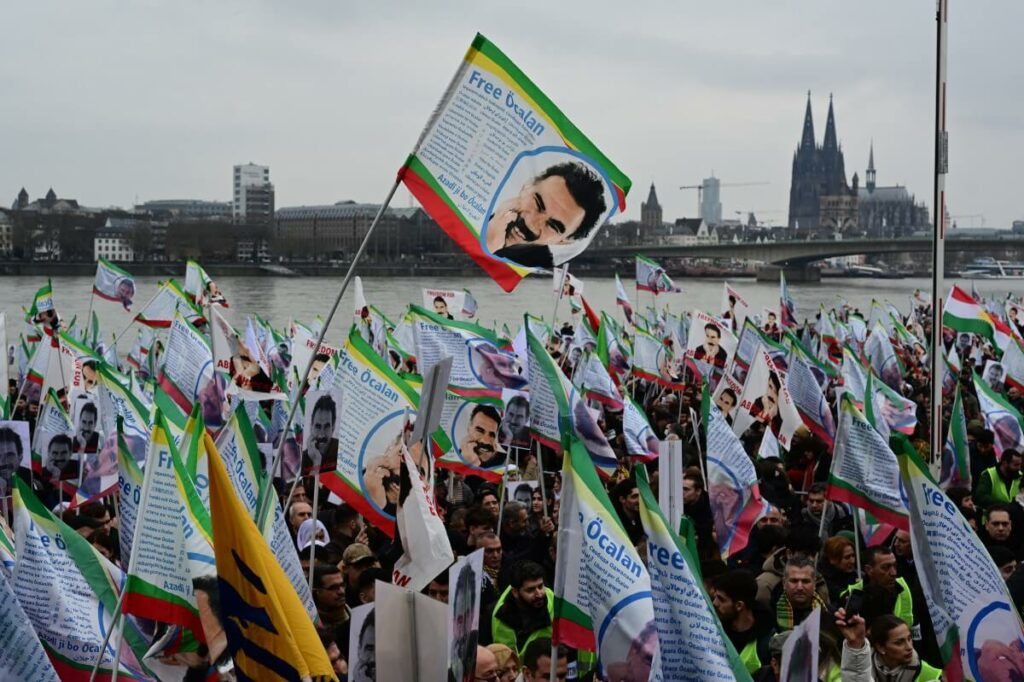
Mr. Öcalan’s freedom is essential for the success of the process
Mr. Abdullah Öcalan plays a central role in this process. If a it is to have any hope of success, his contribution as a key interlocutor on the Kurdish side must be facilitated and protected by conditions that genuinely allow for communication, legal safeguards, and political effectiveness. Of particular importance in this regard is the implementation of the 2014 ruling by the European Court of Human Rights on the so-called “right to hope”, which holds that life imprisonment without the possibility of release is a violation of the prohibition of torture and ill-treatment. The member states represented on the Committee of Ministers of the Council of Europe can provide their support in this matter, as the framework law did not address either the status or the terms of Mr. Öcalan’s sentence.
As the Kurdish issue is also a problem in Syria and Iran, a solution to the conflict in Turkey could also have a positive impact on Syria and Iran, two other states in which the Kurdish people are facing challenges and an uncertain future. The process in Turkey, if successful, would represent a significant step towards deescalation and stability throughout the broader Middle East.