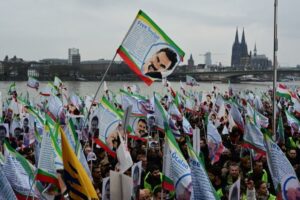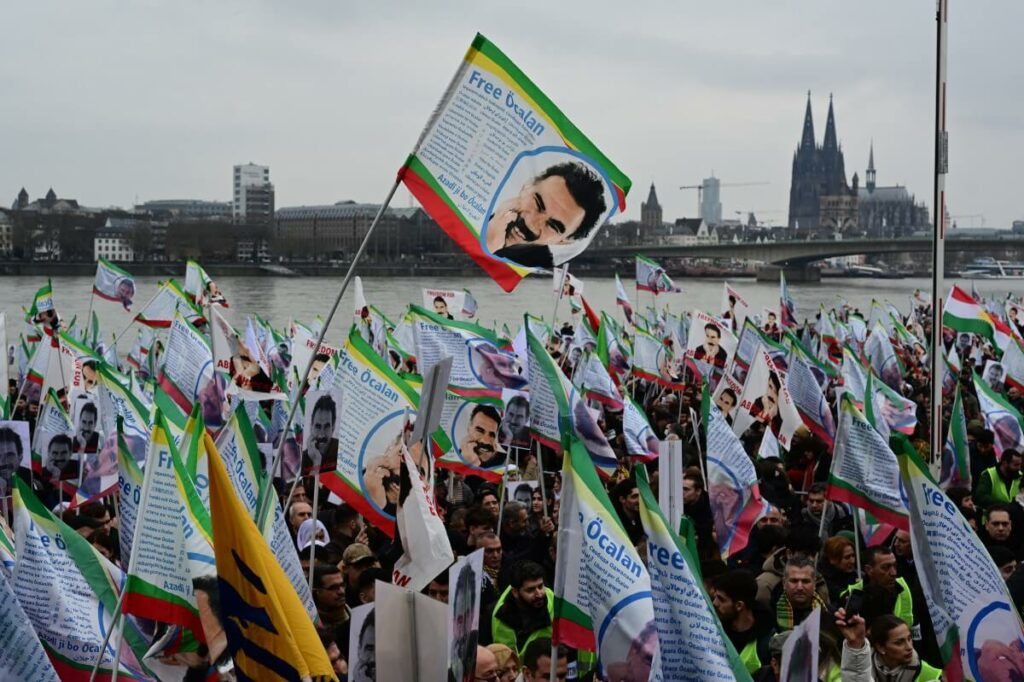
To mark Anti-War Day, at this time when there is hardly any talk of peace but constant discussion of war and acts of aggression, we want to use the example of the Kurdish Freedom Movement to show that peace is possible.
One of the main centres of conflict is the Middle East, where it is possible to draw up a long list of conflicts including the longstanding war in Palestine, the war involving Iran, the USA, Israel, Yemen, and Lebanon, the instability in Syria and Iraq, and the shift in the Turkish state’s position.
Efforts to pursue the alternative – to pursue peace – are a rarity. The exception in the Middle East is the political campaign for peace led by the Kurdish leader Abdullah Öcalan and his movement.
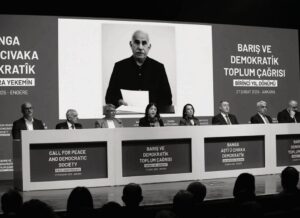
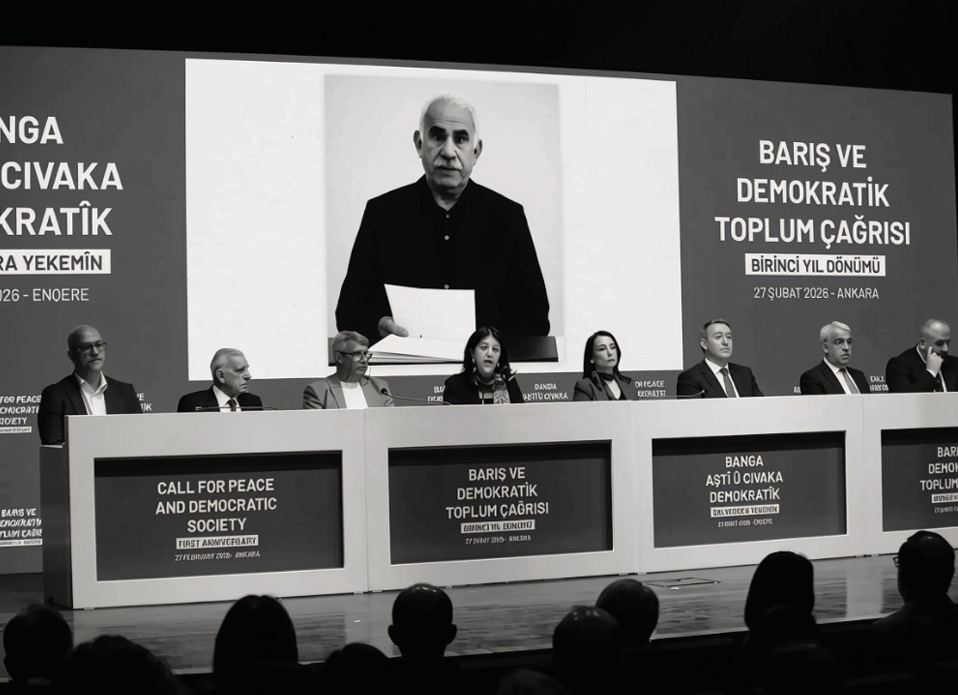
After 47 years of armed struggle against the assimilation and annihilation of the Kurdish people by the Turkish state, on 27 February 2025, Öcalan radically challenged the regional and international logic of war with his call for Peace and a Democratic Society.
Since the founding of the Republic in 1923, Turkey has consistently relied on aggression and militarism. All political struggles for freedom and equality in society were countered by the Turkish state, including with three military coups (1960, 1971, 1980). The Kurds were forced to turn to self-defence, to ensure their survival. Despite state aggression, the Kurds have managed not only to survive, but also to voice their demands beyond Turkey’s borders. No state authority has succeeded in breaking the Kurdish people’s high level of organisation and mobility. Kurdish society, characterised by women’s freedom and the coexistence of diversity, has created a strong understanding of democracy. It is a society that, through its political resistance, can bring about democracy and, consequently, peace even beyond national borders.
Öcalan’s radical break with the previous form of resistance draws on the strength of Kurdish society and the values it has forged, but also on the realisation that the Turkish state has reached the end of its war logic, which has failed to defeat the Kurds. The realisation on the part of the Turkish state, brought about by Öcalan’s struggle, could become a prime example for the entire Middle East region. If Turkey, Syria and Iran were to adopt Kurdish proposals for a solution –the democratic integration of the Kurds into a democratised political system and legal framework– this could bring new hope to the entire region.
Resolving the Kurdish question could bring peace to the Middle East. International support for Öcalan’s efforts is crucial.
For this to happen:
The criminalisation of the Kurds through the inclusion of the PKK on the EU and US terrorist lists, and the ban on the PKK in Germany, must be lifted so that Kurds can freely pursue their political struggle for democracy and peace.
The Committee of Ministers of the Council of Europe must implement Öcalan’s right to hope by taking practical steps.
Executive Council of the Kurdistan National Congress
September 1, 2026