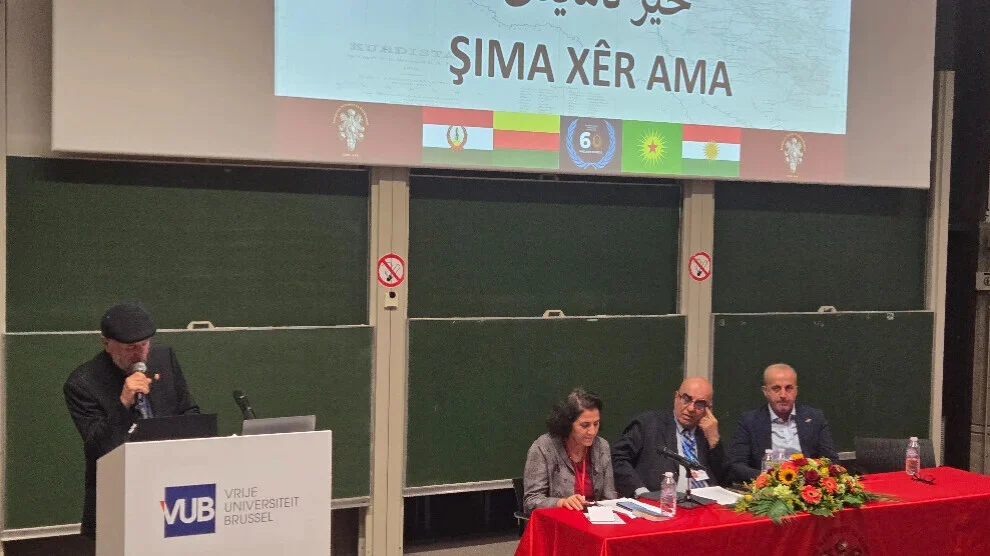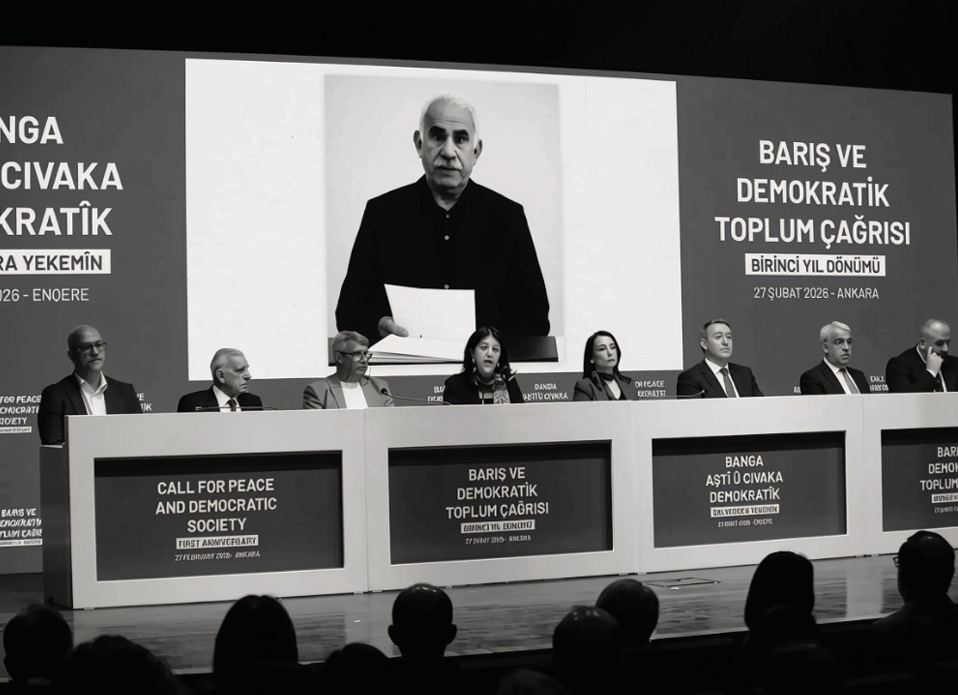
Despite 27 years of imprisonment in harsh conditions of isolation, Kurdish people’s leader Abdullah Öcalan continues to insist on the possibility of peace through the resolution of the Kurdish question. Today, we condemn the international conspiracy that lead to his imprisonment, and once again support his call for ‘peace and democratic society’.
With the end of the Cold War the United States adopted a new strategy on the world stage. This approach, known as the “New World Order,” aimed to consolidate global dominance. In the early 1990s, the U.S. launched a large-scale military intervention in the Middle East. Its aim was to reshape the region in line with its own interests. Iraq’s invasion of Kuwait on August 2, 1990, was the pretext the U.S. needed to rapidly increase its military presence in the region.
At the heart of the US master plan was the neutralisation of what they perceived as threats in Iran, Iraq and Syria. To achieve this, the U.S. planned to enlist the support of the Turkish government as a NATO ally. In turn, Turkey insisted on eliminating the PKK (Kurdistan Workers Party), which had increased its influence in the Middle East and become a key player by 1998.
The U.S. rejected any alternative in the region that did not serve its own interests. Under the leadership of Abdullah Öcalan, the PKK was implementing a strategy aimed at achieving democracy by resolving the Kurdish issue in Turkey, Iran, Iraq and Syria. For this reason, Abdullah Öcalan was targeted in an effort to neutralise the PKK. His strategic goal was to end the denial of the Kurdish people in these states through dialogue and negotiation, thereby paving the way for their democratisation and the creation of a democratic Middle East. Öcalan pursued this goal from 1979 to 1998 while living in Syria.
The pretext for the war in Syria was the presence of Öcalan in Damascus. However, Öcalan left Damascus on 9 October 1998 and went to Europe with the aim of preventing the war. The goal in Europe was to persuade the states responsible for the Kurdish issue to find a solution through political and diplomatic efforts. Unfortunately, however, the European states were also unwilling to resolve the Kurdish issue. Consequently, they did not want Öcalan to remain in Europe. Following his departure from Damascus, the Kurdish movement came under increased international pressure.
Between 9 October 1998 and 15 February 1999, Öcalan was under constant threat. On 15 February 1999, he was abducted and handed over by CIA and MOSSAD to the Turkish state. Imprisoned on Imralı Island for the last 27 years, he has been subjected to severe isolation, injustice and lawlessness.
This massive operation targeting Öcalan, the leader of the Kurdish people, was later exposed by evidence that came to light. In summary, it was characterised by lawlessness, immorality, hypocrisy, false friendship, and a web of vested interests among those in positions of power.
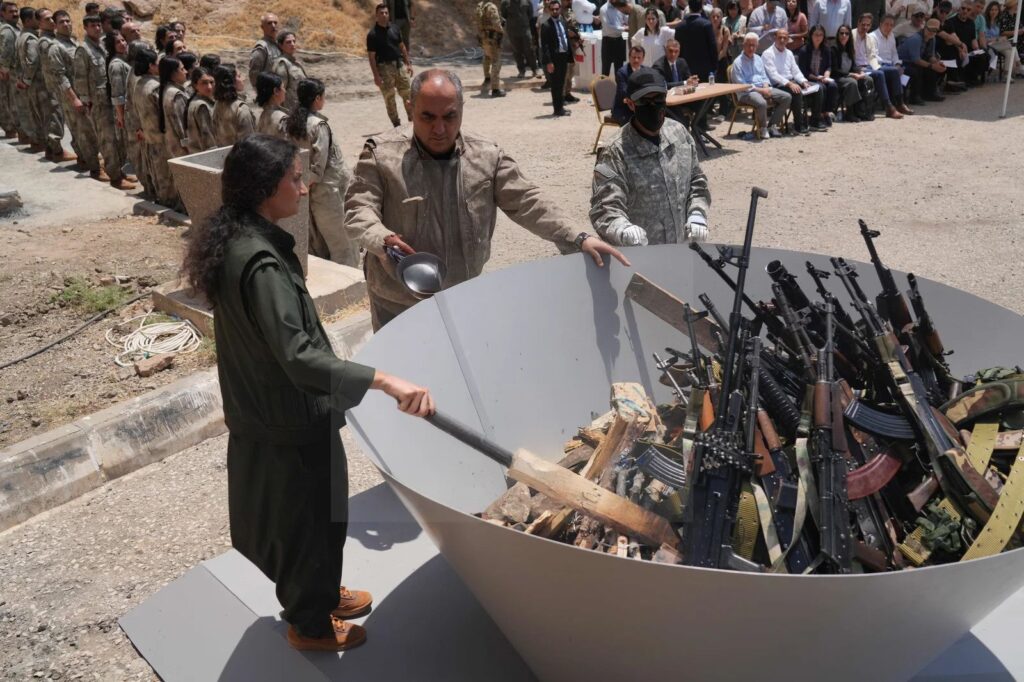
Yet Öcalan—who has never compromised his belief in peace under any circumstances—continues to strive for peace in the region. On 27 February 2025, he initiated negotiations with the Turkish state, opening a new opportunity for peace. In the 18 months since then, Öcalan has continued to take historic steps to turn his vision of peace into reality.
Öcalan, who was sentenced to death in 1999, is now sitting at the negotiating table with those who once demanded his execution, seeking a solution to the Kurdish issue. What makes Öcalan remarkable is his unwavering commitment to peace and his determination to pursue it, together with the Kurdish people, who have never abandoned him.
Despite these peace initiatives and the ongoing negotiations, Abdullah Öcalan remains imprisoned. For peace to be achieved and the resolution process to succeed, he must be free.
We once again strongly condemn those who carried out and supported the October 9 plot.
KNK Foreign Affairs Commission