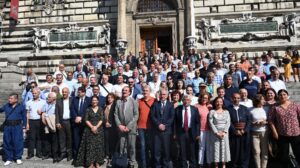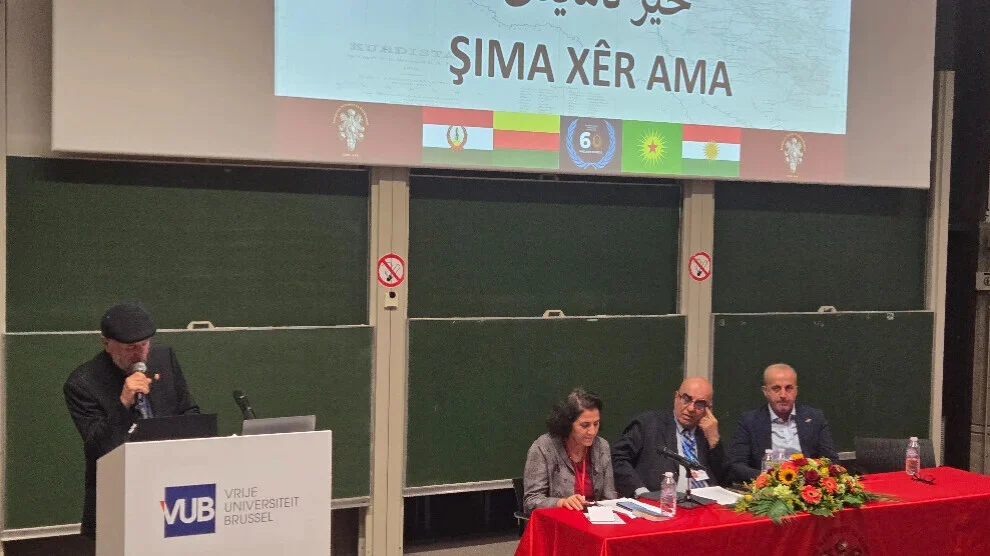
The Kurdistan National Congress (KNK) held its 24th General Assembly in the Netherlands on 6-7 June 2026, with the participation of most of its members. Many guests (presidents and directors of parties and institutions, and independent figures) also attended the meeting.
The protection and development of the Kurdish language
A national stance is required against “Cultural Genocide and Assimilation”: against the policies and actions of the Turkish State that prohibit mother-tongue education in any form; against the Syrian Interim Government, which has caused uncertainty and conflict on the issue of education in Kurdish and in the mother-tongue; against Iran, which boasts of having a province called Kurdistan, but prohibits education in the Kurdish language; and against the situation in southern Kurdistan, which, with its achievements and language, has today become the target of attacks by the occupying Turkish state, by Iran, and by part of the Iraqi government.
The KNK calls on all components of Kurdistan to stand against these attacks, protect the Kurdish language, and support the initiative launched in northern Kurdistan with the slogan, “Every home becomes a Kurdish school.”
Assessments and decisions regarding Kurdistan
Bakur/Turkey
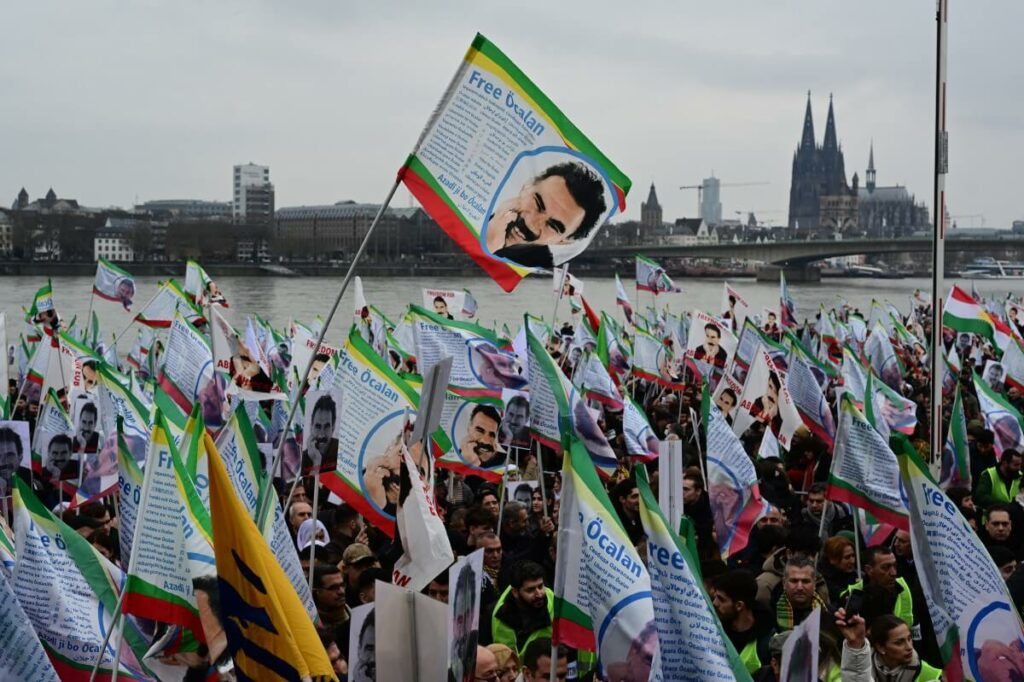
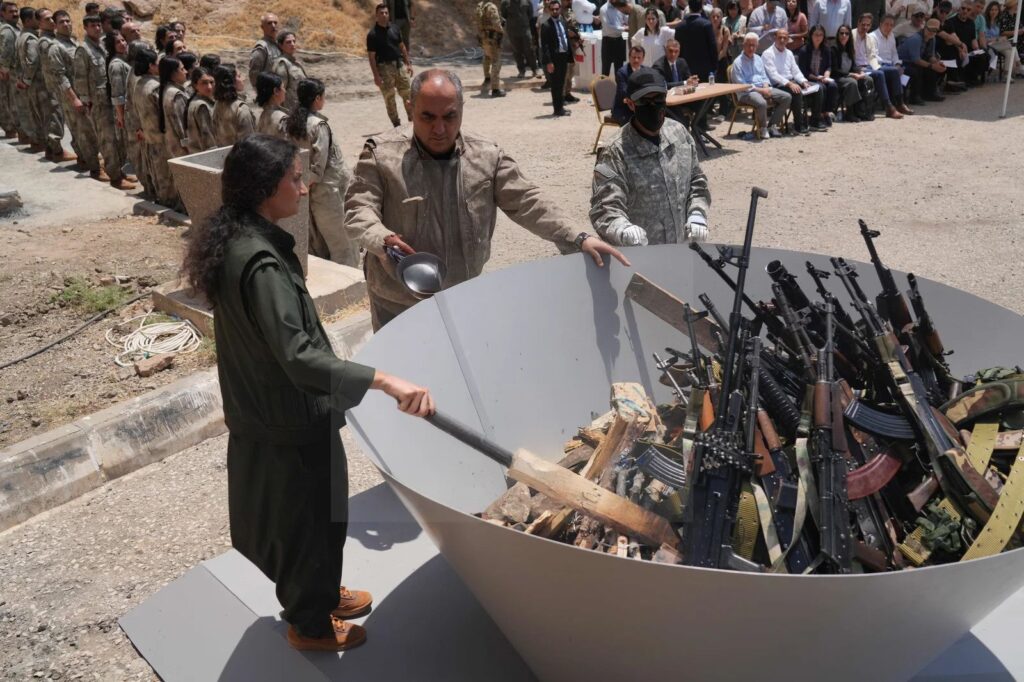
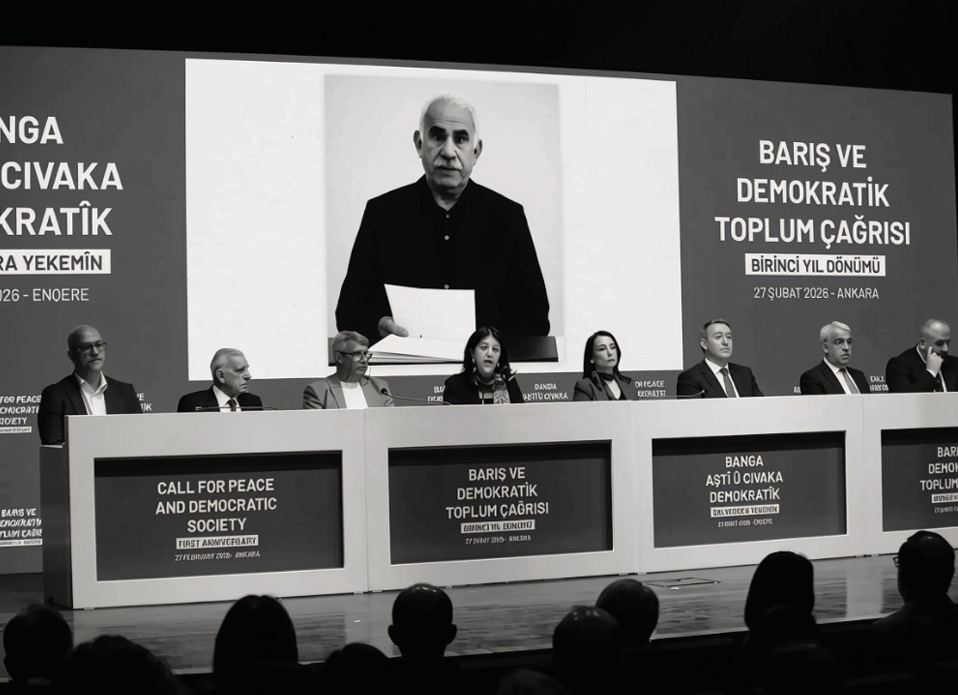
For 20 months, negotiations have been taking place on İmralı Island between Mr Abdullah Ocalan and Turkish state officials on a solution to the Kurdish issue. As a result of these meetings, on 27 February 2025, Mr Ocalan issued a “Call for Peace and a Democratic Society.” On the basis of this call, the PKK held its 12th Congress from 5 to 7 May 2025. On 11 July, PKK members carried out a symbolic burning of arms. On 5 August, a Commission for National Solidarity, Brotherhood and Democracy was established in the Turkish parliament. The commission presented a report in February 2026. Now the process has entered the legal phase. For the process to advance, laws on freedom and integration must be enacted. In addition, the status of Mr Abdullah Ocalan as a negotiator remains to be resolved.
The 24th General Assembly of the KNK views the process in Imrali between Mr Öcalan and the Turkish state positively and supports it. This is a very important process; and if the Kurdish issue in northern Kurdistan is resolved, this will also have a very positive impact on the other three parts of Kurdistan and on the unity of the Kurdish people.
We call on all political, institutions, parties, and organizations, and all the people of Kurdistan to support this process.
We appeal to the United Nations, the European Union and all international organizations and world powers to use their relations with Turkey to facilitate this process.
In addition, we call on the authorities of the Turkish state not to miss this opportunity. We call on them to release Mr Öcalan and open up the route for him to enable peace, and we call for this issue to be put on the parliamentary agenda as soon as possible.
For the smooth development of the process and for monitoring, an impartial third party is needed. The General Assembly of the KNK calls on both sides to open the way for a third party.
Rojhilat-Iran
The Iranian regime is in the midst of a major crisis – economic, social and political. They have turned the country into an open prison for all nationalities, for different faiths, and for women. The people are dissatisfied. They are longing for freedom and for a democratic country. KNK’s Assembly considers the people’s demands and aspirations for freedom and democracy to be right and legitimate, and supports the protesters and freedom-loving activists.
The current war between Iran and America-Israel is creating a new opportunity for the entire Iranian people and our people in eastern Kurdistan. As Kurds, we are not on anyone’s side in this war. However, if it creates new opportunities for the revolution, our people in eastern Kurdistan will undoubtedly use these opportunities. On this basis, the agreement made between six organizations in eastern Kurdistan is a positive thing.
Since the beginning of the war, Iran has been attacking southern Kurdistan under the pretext that the forces of eastern Kurdistan are present in that area. At the same time, Iran has been continuing prisoner executions. In addition, attacks on Kurdish kolbars have increased, and kolbars are being murdered daily. This is a serious and dangerous situation that cannot be accepted.
We strongly condemn the attacks carried out by the Iranian state in southern Kurdistan and on the forces of eastern Kurdistan. We call on political parties and organizations, civil society organizations, intellectuals, and our people in general to take a stand, on the basis of national unity, against the attacks of the Iranian state.
We call on all opposition forces in Iran to form a common front in order to stand with one voice against the regime and to build a free and democratic country.
We call on the forces of the democratic world to not leave the people of Iran on their own, but to support activists against the despots.
Rojava-Syria
In Syria, a new situation has been in force for a year and a half. The Baath regime was defeated and Salafi forces came to power in Damascus, and earlier this year – with the support of the Turkish state – the new Damascus regime attacked the areas of the Autonomous Administration of North and East Syria. In response to these attacks, Kurds and Kurdish friends took to the streets in large numbers throughout Kurdistan and the wider world in support of Western Kurdistan (Rojava). The war ended with an agreement signed by the Transitional Government in Damascus and the Autonomous Administration, but the issue has not yet been resolved. The Transitional Government officially recognizes the existence of the Kurdish people and their constitutional rights, but, so far, this agreement has not been properly implemented.
Since the fall of the Baath regime, there have been many attacks on Alawites, Christians, and Druze, and massacres have been committed against them. If measures are not taken, such massacres will be repeated. We condemn these attacks and call on all relevant forces to stand against them and to protect all components of Syria.
The new authorities in Damascus want to build an Islamic system based on Arab nationalism. Their thoughts and ideas are far from reaching democratic standards. Women and women’s rights are not part of their agenda, and secular and democratic people are under pressure. This creates uncertainty. Without democracy, unrest will continue and Syria may be divided. Kurds must be vigilant and find more friends and allies.
Preserving the achievements of the Rojava revolution is a fundamental task. As before, the changing situation will be monitored and included in the KNK’s agenda and planning.
South Kurdistan-Iraq
Southern Kurdistan, a liberated area with a federal status, is a great hope and source of joy for all Kurds. No matter what happens, these achievements must be protected and developed, as a national duty.
An uncertain situation exists throughout Iraq, and poses dangers for the status of Kurdistan. With Iraq in the midst of a major crisis, many foreign hands are intervening. In the Article 140 area, an Arabization process is being carried out against Kurdish residents. Farmland is being seized and Kurds are being expelled. Unfortunately, despite the dangerous situation, Kurdish forces are not united.
It is more than twenty months since elections were held in southern Kurdistan, but a new government has not yet been formed, and the regional presidential election has not been held. The parliament is not functioning.
If we as Kurds are not united, the federal structure and many of our achievements could be destroyed. And the occupied areas (Article 140 areas) could become completely separated from Kurdistan. The demography of the region is already changing in many areas. All Kurdish political movements must put aside their differences and work together to protect the achievements of Kurdistan.
Since the beginning of the US-Israel-Iran war, Iranian attacks on southern Kurdistan have increased under the pretext that eastern Kurdistan forces remain in that area. The attacks are not only on the bases of the eastern forces, but on the entirety of southern Kurdistan. We strongly condemn this aggression and support the people and leadership of South Kurdistan.
Women in Kurdistan
Representatives of women’s organizations participated strongly in the General Assembly, contributing their assessments and analyses. The women’s movement has developed to occupy a high level in the institutions and organizations of Kurdistan, however, as in other countries, the problem of women’s freedom has not been solved. The Kurdistan women’s movement is a source of pride and resonates at world level, but the issue is big and requires a deep and long-term campaign. The mentality of thousands of years of patriarchy needs to be changed.
Women criticize political parties for their patriarchal mindset and want the Kurdish politics to be opened to women. In particular, political parties are urged to remove obstacles to women’s participation in national unity affairs so that discussions and solutions can be strengthened.
All discriminatory attitudes towards women must be rejected as anti-democratic, and respect for women’s free will must become a foundation of political understanding.
The killing of women, whether at home or on the streets, must be understood as a crime against humanity.
Women must be able to take their place in politics and in decision-making institutions according to their own free will. The KNK rejects any kind of instrumentalization of women in politics and calls on all political and social groups in Kurdistan to respect women’s will.
Shingal-Ezidi
The meeting discussed the situation in Shingal and the situation of Yazidi believers in general. Shingal is a part of Kurdistan and is under attack from many sides. All Kurdish forces must stand against the attacks of the invaders and protect Shingal. The Yazidi identity must be protected, the demography of Shingal must not be damaged, and the people of Shingal must be free to govern themselves.
Feyli Kurds
The issue of the Feyli Kurds has been on the KNK’s agenda for a long time, and the congress has established a special committee – which is still active – to address their problems and demands. The Feyli Kurds are under threat of assimilation. This is not only an issue for the Feyli Kurds and the KNK; it is a national issue, and all Kurdish powers must address the situation in order to find a fair solution.
Yarsan Kurds
The meeting looked at the situation of the Yarsan believers, who are under severe pressure in eastern Kurdistan, both as Kurds and for their faith. The Yarsan religion is an ancient faith of Kurdistan and must be protected.
Kurds of Khorasan
In discussions of the situation in eastern Kurdistan and Iran, the Kurds of Khorasan are often forgotten. This is a shortcoming of most Kurdish organizations. Since its establishment, the KNK has tried to focus on their situation
Assyrian-Syriac-Chaldean people
The Assyrian-Syriac-Chaldean people are an ancient people of our region. They have been represented in the KNK since its establishment, and have a place in the leadership. These people have been the subject of many massacres and genocides, and are not only targeted for their ethnicity, but also because of their Christian religion. They were one of the first targets of ISIS, who committed massacres against them. Consequently, their population in the region has decreased and is further decreasing. Protecting this ancient people is a major task of the KNK and all Kurdish movements. The fate and liberation of the Kurdish people and of the Assyrian-Syriac-Chaldean people is interconnected, and victory will be mutual.
Along with the Kurdish people, Assyrian-Syriac-Chaldean people, Armenians, Arabs, Turkmens, and other peoples in Kurdistan must have their democratic rights secured under social and political guarantees. The rights of these communities must not become victim to the calculations of political power; they must be respected as the ancient peoples of this land.
The KNK rejects all forms of bigotry and racism, no matter who it comes from, and calls on all Kurdish political forces and authorities to prevent internal and external forces from promoting division through nationalism.
True Path – Alawite Kurds
A large part of the Kurdistan community are believers in the True Path – Alawites. This religion is also an ancient faith of Kurdistan. Alawites have been subjected to many attacks and massacres throughout history. In Turkey, they cannot worship and live according to their faith as they wish. They are subjected to discrimination, and, at the same time, the state is trying to assimilate them into Sunni society. Many KNK members belong to the True Path, and it is represented within the KNK. The KNK respects the Alawite faith and protects the rights of believers in every way.
Kurds of Central Anatolia
Representatives of the Central Anatolian Kurdish Platform (PKAN), who are members of the KNK, described the situation of our people in Central Anatolia. Kurds here have long taken their place in the revolution and consider themselves as peoples of Kurdistan. As a result, they suffer racist attacks. All Kurdish forces must take this situation seriously and not leave our people in Central Anatolia on their own.
Kurds in CIS
The meeting also discussed the situation of the Kurds in the countries of the former Soviet Union, including the recent attacks against Kurds in the Central Asian countries of Kazakhstan and Kyrgyzstan.
Kurds are not only under attack in Kurdistan, but face threats and attacks throughout the world. This will continue until a free country is established for the Kurds. In every place and region, the KNK brings the rights of the Kurdish people to the agenda and protects them.
RESOLUTIONS:
Urgent Need for a National Conference
At the 100th Anniversary Conference of the Treaty of Lausanne, in July 2023, a decision was made to convene a National Conference to strengthen the unity of the Kurdish people. This issue was taken up as a key point in the KNK’s General Assembly. Prior to the General Assembly meeting, consultation meetings were held on this issue with independent figures throughout Kurdistan, and opinions and suggestions were received. We can say that the 24th General Assembly was a preparatory meeting for the National Conference. Plans for the conference formed a major part of the discussion. The goal is to convene a National Conference within this calendar year in order to discuss all our problems and strengthen our unity through a common strategy.
We are living in a state of emergency. As a result of the current war, it is unclear what role the Kurdish people and Kurdistan will be given in the planning of the region. In this historical period, the work of democratic Kurdish unity is very important. Our people need national unity for the creation of a national strategy.
The four states that occupy Kurdistan are all in the midst of major crises. The situation in Iraq and Syria is uncertain and highly unstable. Iran is facing many crises. Although Turkey considers itself strong and has managed to win some international conflicts, it, too, is in the midst of a crisis and its future is uncertain. There is a global war in the Middle East region, and the occupying states are each taking sides in this war in their own way. The region is heading towards a major change. In this situation, if we can organize ourselves better and strengthen our unity, we will be able to create a permanent status for all of Kurdistan. In short, it is time for unity. It is time for solutions. It is time for freedom. It is time for work.
Kurdish Observer State at the United Nations
A resolution was proposed by the KNK Foreign Affairs Commission to start a campaign to request that the Kurdish people be recognized as a stateless nation and be represented with the Status of an Observer State at the United Nations. The Kurdish nation, with a population of around 60 million, is not represented in international organizations and is considered as non-existent. This is unjust and constitutes oppression; it is unacceptable. After extensive discussions, it was decided that the KNK and all KNK-affiliated entities should be active in running this campaign.
On the 103rd anniversary of the Treaty of Lausanne, large-scale gatherings and demonstrations will be held, as every year in July.
The proposed resolutions were voted by members and for the future planning were collected. The 24th General Assembly was concluded successfully.